What should you consider when setting up cameras for Vision AI
A good Vision AI application does not only depend on the AI model, but also on how the camera is…

AI is developing at an incredible pace. New models, copilots and agents are becoming increasingly powerful. Almost every organisation is already doing something with AI, simply because it is so easy to get started. This has an interesting consequence: the technology itself will soon make less and less of a difference. If everyone can use the same models, tools and automation, competitive advantage has to come from somewhere else. Namely, from the data you use to feed that technology. And that is exactly where many organisations still have enormous opportunities.
A language model is used by thousands of companies, a competitor can rebuild an AI agent in no time, and similar software solutions are appearing faster and faster. But what happens inside your own organisation cannot simply be copied. That data comes from your processes, locations, customers, employees, goods flows and day-to-day operations. That is what makes it unique.
The better you are able to structure and use that data, the more valuable AI becomes. Not because the model itself becomes smarter with your own data, but because it gains more context and learns to understand your organisation in a unique way. And that is exactly where your organisation’s AI advantage can begin.
Organisations today have access to large amounts of digital information. The ERP system knows which orders are scheduled, the CRM system shows which customers have been in contact, and building management systems measure temperature and energy consumption.
Yet a large part of what actually happens takes place in the physical world. Examples include a truck arriving later than planned, a queue starting to form, a room that is barely being used, or a group of people moving through a space differently than expected. Many of these things are seen, but are never recorded as data. This is where visual data and Vision AI can play an important role.
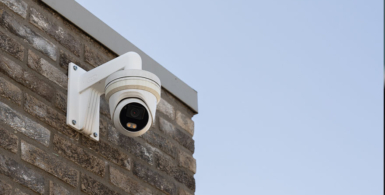
Almost every organisation has cameras. In most cases, they are used for security: footage is stored and reviewed afterwards when something has happened. In that sense, a camera mainly functions as a rear-view mirror. But a camera sees much more: movement, objects, vehicles, directions of travel, crowd levels, dwell time, behaviour and interactions.
Most of that information remains unused, because a computer cannot do much with raw video footage alone.
This is where Vision AI comes in. Vision AI is artificial intelligence that learns to “understand” images, much like we recognise what we see: a person, a car, a queue. The system does not simply watch. It translates what it sees into information you can actually use. The camera is no longer just a recording device, but a sensor that tells you what is happening in the physical environment.
A video image consists of pixels, and a business application cannot do much with those pixels on their own. Vision AI turns them into meaningful data, such as:
This data can be stored, analysed and connected to other systems. This creates a new layer of business data: data about the physical world.
This makes the application much broader than security alone. The same camera can provide information for different departments:
In this way, security cameras become independent data sources, or sensors, which together can generate an enormous amount of valuable data.
Organisations do not stand still. Growth, a new strategy or other developments constantly change the demands placed on technology. The same applies to camera systems.
Today, you may want your cameras to detect intruders. Next year, you may want them to measure waiting times. After that, you may want to identify operational patterns or enable systems to respond automatically to what is happening in the physical environment.
Every new question should not require new cameras, separate solutions or an entirely new infrastructure. That is exactly why Vision AI fits so well. The technology is flexible: the camera stays the same, only the question changes.
The AI race is therefore not only about who has the best models. Increasingly, it comes down to another question: what unique data can your organisation make available to AI?
For many organisations, a large part of the answer is already hanging on walls, ceilings and facades. The cameras are there, the footage is there, and the physical reality is there. The next step is to turn that reality into data.
Because ultimately, the real AI advantage is not only in the model. It lies in what your organisation knows, and what others do not.