How to Turn Visual Data into a Strategic AI Advantage
AI is developing at an incredible pace. New models, copilots and agents are becoming increasingly powerful. Almost every organisation is…
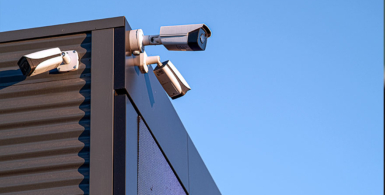
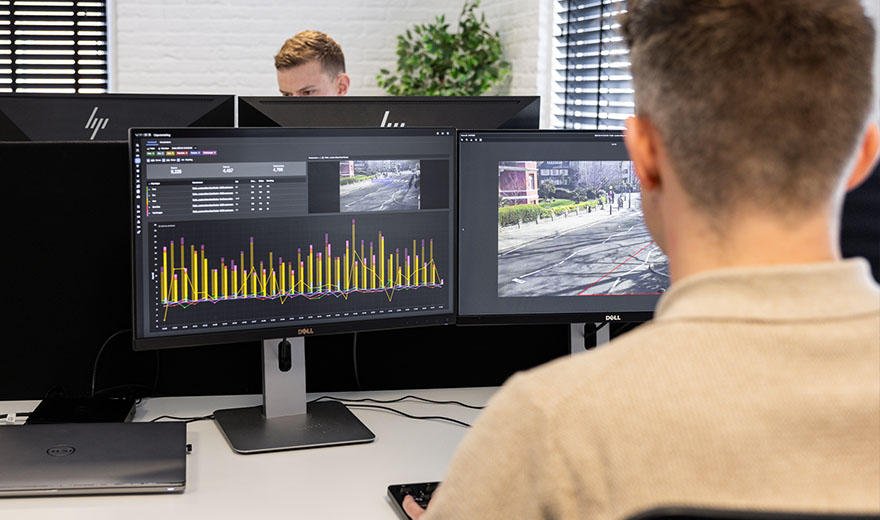
Vision AI is a form of artificial intelligence that automatically analyzes images and video to recognize objects, people, events and patterns. It turns camera footage into useful information that a person or another system can search, analyze or act on. While a traditional camera mainly records images, Vision AI adds an intelligent layer on top.
A simple example:
A camera records a person walking through the scene. Vision AI can add information such as:
Vision AI therefore turns images into structured information.
At a basic level, Vision AI consists of several steps: Camera → AI analysis → metadata → event → action
A camera provides video footage. An AI model analyzes those images and looks for objects, characteristics or situations it has been trained to recognize. This can result in metadata such as:
The system can then determine what should happen with that information.
For example: “Generate an alarm when a person enters this zone between 22:00 and 06:00.”
That depends on the model being used and the application. Common capabilities include:
Vision AI can analyze both live camera streams and previously recorded video.
The term can suggest that a computer system “sees” in the same way we do. It does not.
An AI model learns to recognize visual patterns during training. When new images are presented, it calculates how likely it is that an object or situation matches what it has learned before.
A person may immediately recognize a truck. An AI model analyzes patterns in the image and makes a prediction such as: “This object most likely belongs to the category truck.”
That is why training data, camera quality and environmental conditions all affect Vision AI performance.
With traditional video surveillance, most of the interpretation is done by a human. An operator watches the footage and decides what is happening.
Vision AI can automate part of that analysis.
The goal is not necessarily to replace the operator. Especially in large camera networks, AI can help direct attention towards situations that may be relevant.
Instead of continuously monitoring dozens of screens, an operator can receive an alert when a specific event is detected.
Vision AI can broadly be used for three types of applications.
Security
For example intrusion detection, perimeter protection, loitering detection or faster incident investigation.
Safety
For example fall detection, PPE detection or fire and smoke detection.
Operations
For example people counting, queue analysis, heatmaps, dwell time and traffic flows.
This means the same camera can become more than just a security camera. It can also act as a sensor that provides information about what is happening in a physical environment.
Organizations often already have large amounts of camera footage.
The challenge is not always to collect more video. The challenge is to quickly determine which information in that footage is relevant.
Vision AI helps automate that process.
As a result, video changes from a passive recording source into an active source of information.
In short: a camera records what happens. Vision AI helps understand what happens.