Critical infrastructure needs more than cameras that record
Recent incidents in the Netherlands and Germany once again show how vulnerable critical infrastructure can be. And they raise an…
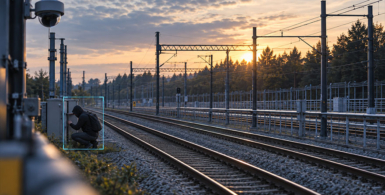

Video AI analytics is becoming increasingly popular. This technology is able to automatically analyse video footage and detect all kinds of unwanted scenes. This has several advantages. Although it is increasingly being deployed, there are also still many misunderstandings about it. In this article, we cover the most common misconceptions about Video AI Analytics. Why are they misunderstandings? We are happy to explain.
Not true! On the contrary, most Video AI Analytics systems, such as Vaidio, work extremely well with existing IP cameras. They just pick up the video stream from the camera. As long as the image quality is sufficient (usually Full HD is enough), the system can analyse the video stream. So a completely new infrastructure is not needed.
On the contrary! Video AI Analytics is precisely a scalable solution. Whether you have 10 or 10,000 cameras – Video AI Analytics grows with your organisation. So even smaller healthcare institutions, municipalities or retailers can benefit from one smart AI functionality, such as intruder detection.
Incorrect! Video AI Analytics actually supports the control room. Instead of monitoring 100 cameras at once, Video AI Analytics watches and filters what is important. Due to the high accuracy of the technology, operators receive only relevant notifications. This way, they devote their attention to things that are really urgent.
Incorrect! Oude video-analyse werkte vaak met bewegingsdetectie en ‘vaste’ regels. Moderne Video AI Analytics gebruikt daarentegen Machine Learning en Deep Learning. Het herkent daardoor verschil tussen bijvoorbeeld een mens, een dier of een schaduw. Dat betekent: een hoge nauwkeurigheid, minder ruis en meer bruikbare meldingen.
Not true! In principle, this technology assumes privacy precisely because it is very important in the world of safety and security. Many solutions therefore offer a variety of privacy features, such as face-masking, blurring, audit trails and more to comply with AVG regulations. Always check this with your possible Video AI A vendor.
Doesn’t add up! Of course, there are always exceptions, but a good Video AI solution is built so that, with a little configuration, it can be deployed precisely within a day.
Wrong!. Of course, this technology also requires an investment. But it also delivers a lot: operators work faster and more efficiently, incidents resulting in damage or theft are prevented and business processes are streamlined. Of course, there is no single answer to this question, as it varies from case to case. As a rule, Video AI often pays for itself within 12 to 18 months. Especially if you continue to use existing cameras. But again: this is not the same for every case.
Contactus! Our specialists will be happy to think with you. That way, this technology will also become easily accessible for your organisation.