Vaidio now supports SIA DC-09 for direct alarm transmission to control rooms
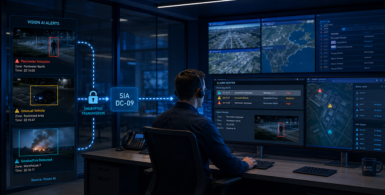
VAIBS now supports the SIA DC-09 protocol within Vaidio. This allows alarm notifications generated by the Vision AI platform to…
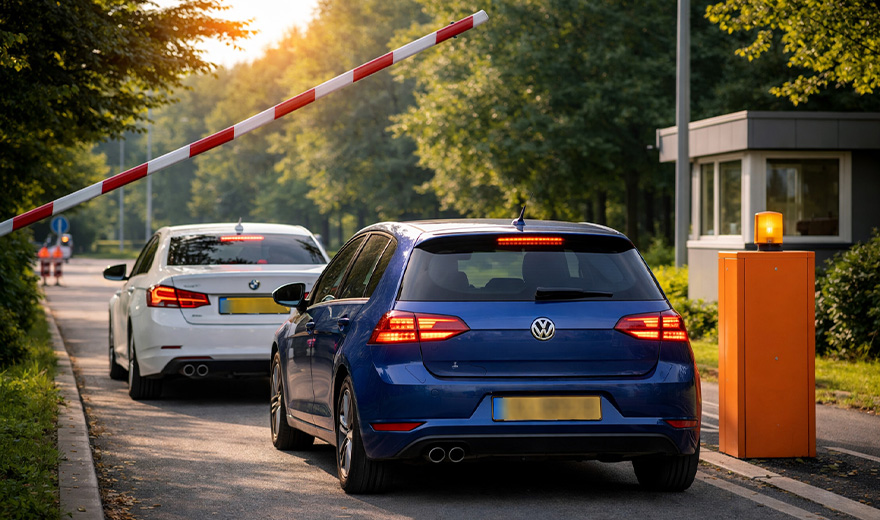
A car slipping through a barrier behind another vehicle. A van sliding in while the gate is still open for a truck that just entered. These seem like harmless, everyday situations. Yet this is exactly how unauthorized vehicles gain access to secured premises, parking facilities, and restricted areas. We’ve written before about tailgating and piggybacking involving people. But the same technique is used just as often with vehicles — and traditional systems fall short there too.
In our previous article on tailgating and piggybacking involving people, we described how intruders slip in behind someone opening a door. With vehicles, the principle is identical — only the scale differs. Instead of a doorway, it’s a barrier or rolling gate. And instead of a person following on foot, a vehicle follows on wheels.
The core problem remains the same: the access control system registers one authorized object, but two pass through.
Vehicle tailgating occurs wherever access control matters: at logistics sites where unauthorized vehicles can appear unnoticed at loading docks, at ports and airports where vehicle movements are closely monitored, in parking facilities where tailgating happens daily, and at critical infrastructure sites where a single unauthorized vehicle can have serious consequences.
License plate recognition, transponders, barriers — they all verify who has permission, but not what actually happens at the entry point. A barrier rises for a recognized license plate and stays up just long enough for a second vehicle to slip through undetected. Incidents are often only discovered after the fact, when something has already gone wrong.
As we described before, Vision AI adds an intelligent analysis layer to existing cameras. For vehicle tailgating, it works in exactly the same way. Using virtual zones and counting lines, Vision AI can automatically detect and count every vehicle passage. The technology links those counts to a simple rule: how many vehicles are permitted per access event?
The moment Vision AI detects more vehicles than are authorized, the technology immediately flags this as an anomaly. From there, Vision AI can send an alert to the control room, automatically save a video clip as evidence, or trigger a follow-up action in the access control system. Combined with license plate recognition, Vision AI can even identify the unauthorized vehicle — even after it has already entered the premises.
The difference from traditional access control comes down to one sentence: not just ‘license plate X was granted access’, but ‘two vehicles passed through when only one was authorized’.
Organizations that have already invested in Vision AI for people detection can apply the same technology to vehicles — creating a comprehensive security picture across the entire access point, from pedestrian to truck. Access control will always revolve around authorization, but knowing who has permission is not the same as knowing what actually happens at the entrance. Vision AI bridges that gap — for people and vehicles alike.
Has reading this article sparked your interest in how Vision AI can help your organisation tackle tailgating by people or vehicles? Find out more about our Vaidio Vision AI platform on the product page or get in touch with our specialists. They’ll be happy to help.