How is an Vision AI Model trained?
An AI model is trained by letting it analyze large numbers of examples and repeatedly comparing the outcome with the…

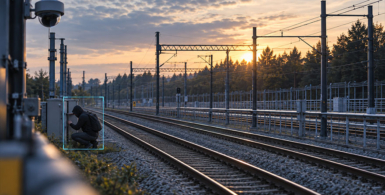
Synthetic data is artificially generated data that simulates real-world situations. In Vision AI, synthetic data is used to train AI models with images that were not captured by a real camera, but created digitally.
For example, virtual images can be generated of people, vehicles, buildings or industrial environments. Lighting, camera angle, clothing, weather conditions and distance can all be varied deliberately.
The goal is the same as with real training data: teaching an AI model to recognize objects and situations reliably.
Training Vision AI requires large amounts of examples. But real-world data has limitations. Some situations occur rarely, others are difficult to capture, and some may involve privacy-sensitive information. Synthetic data makes it possible to create such situations in a controlled way.
For example:
This allows an AI model to learn from much more variation without having to record every scenario in the real world.
Conditions can be changed easily in a virtual environment. As a result, a model can be trained on far more variations than would be practical with real camera footage alone.
When people are generated digitally, no real individuals need to be recorded. This can reduce privacy risks during model development.
Some events are rare, but still important to recognize. Synthetic data makes it possible to include those scenarios in training datasets.
With real images, it can take a lot of time to label exactly what appears in each image. In a synthetic environment, that information is often already known. The system may automatically know: This object is a person and is located at this position. That makes it easier to create large labeled datasets efficiently.
Not exactly.
Synthetic data is more than asking a generative AI model to create a random image. High-quality synthetic training data is generated in a controlled environment.
It can be known exactly:
That level of control is what makes synthetic data valuable for training Vision AI.
No.
The real world is always more complex than a virtual environment.
Think about:
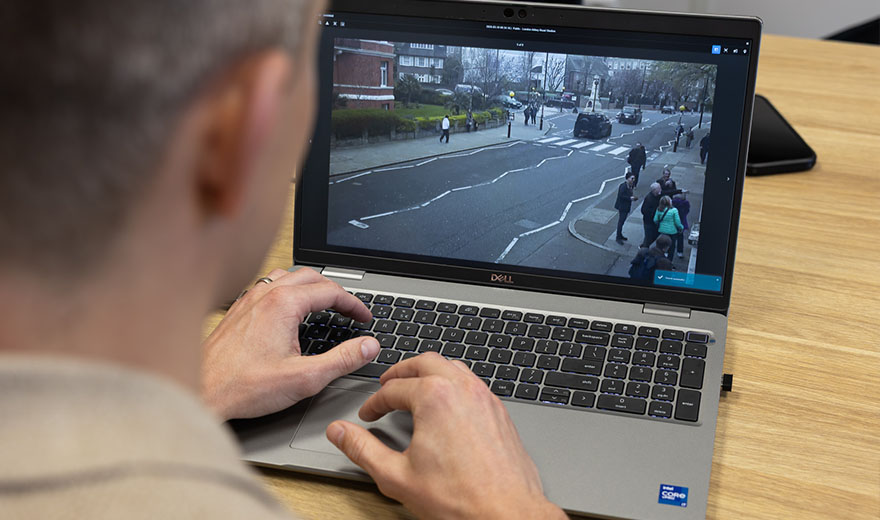
That is why testing and validation with realistic camera footage remains important.
A model that performs well on synthetic data still has to prove that it works in practice.
The greatest value often comes from combining both. Synthetic data can help train AI models at scale, with high variation and under controlled conditions. Real-world footage then shows how well that model performs in actual environments. In short: Synthetic data does not replace the real world, but it can help AI prepare better for it.