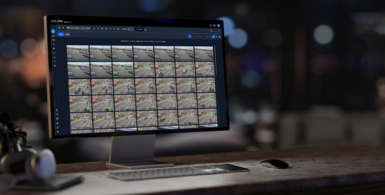
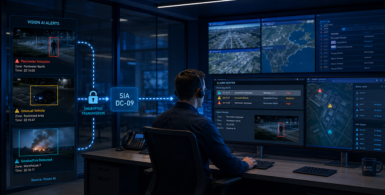
Vaidio now supports SIA DC-09 for direct alarm transmission to control rooms
VAIBS now supports the SIA DC-09 protocol within Vaidio. This allows alarm notifications generated by the Vision AI platform to…

More and more organisations are aware that video contains a huge amount of data that can contribute to more efficient design of security and/or other processes. As a result, the popularity of Video AI Analytics is increasing. There are several solutions in this area from different vendors. So how do you make sure you make the right choice? This article gives you some guidance.
There are many different things to consider should you start looking for a suitable Video AI Analytic system. And that goes beyond the functional area alone. From implementation to maintenance, from configuration to updates for maintenance. And even though this sounds complicated, fortunately most Video AI Analytic systems are intuitive and user-friendly. If you take into account the points below when selecting, you can be sure to make an informed choice.
Before deciding on a particular system, it is a good idea to check how much of an implementation is involved. Every organisation has a unique environment, each with its own software and hardware setup. Normally, a Video AI Analytic system will have to fit in seamlessly, but there are always exceptions. What hardware is required compared to what we already have? Because buying a new server farm or camera network is obviously quite expensive. And while we’re on the subject: what are the options in terms of Cloud? Perhaps not the nicest topic, but very important. The better a system connects to the current or desired environment, the easier the implementation will be and the smaller the chance of errors will be.
In addition, Is it important to establish what the current needs are, but also what the needs will be in the future. Do you foresee growth or do you think other business activities will be added in the near future? Then what exactly about the scalability of the AI platform offered? On this point, there may still be differences between the solutions available in the market. Actually, this point also ties in with the previous one. Because when you start small, a Cloud architecture might be interesting. But is it still interesting if you expect to scale up in the short (or long) term? Determine the possibilities and impossibilities and draw the right conclusions.
Once the system is up and running, of course you want its maintenance to be easy. Configuration, upgrades, support. These are all things that simply have to be well organised if you, as an organisation, want to get the most out of your new software platform. Actually, this is also a bit of an extension of good scalability. Because when you expand a Video AI Analytics platform, it also means that its maintenance becomes more. Can this still be absorbed by the current staff? And what does growth mean for the integrations that are running, for instance? Will that maintenance also remain manageable?
Last but not least: vergeet vooral niet te denken aan de eindgebruiker. Want zij moeten uiteindelijk werken met de software. Daarvoor is het belangrijk dat de technologie die je kiest makkelijk in gebruik is en doet wat het moet doen. Dus: een goede, intuïtieve interface die gebruikers ondersteunt in de productiviteit van de taken die ze uitvoeren. Daarbij is het ook goed om te kijken naar hoe de aanbieder daarin ondersteunt. Zijn er bijvoorbeeld goede trainingen beschikbaar? En mocht een medewerker vastlopen, is er voldoende support aanwezig?
But before looking at all these things, you will of course look at the functionality offered by the various solutions in the market. After all, it has to match the need. The possibilities of Video AI Analytics are almost endless, the benefits all the greater as a result. To provide insight into those benefits, we wrote an article on the six biggest advantages of this technology. Below is a brief summary:
Want to know more about the benefits above? Discover it in this article we wrote.