Vaidio now supports SIA DC-09 for direct alarm transmission to control rooms
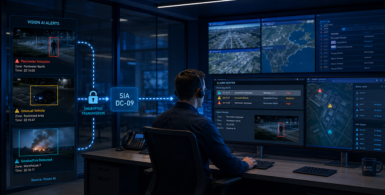
VAIBS now supports the SIA DC-09 protocol within Vaidio. This allows alarm notifications generated by the Vision AI platform to…
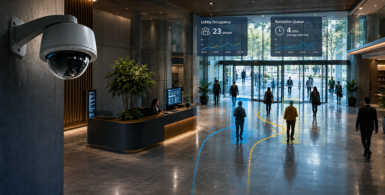
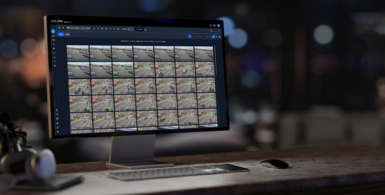
Most organizations already have cameras in place. Sometimes dozens, sometimes hundreds. They are connected, they record, and they store data. But what actually happens with all that footage? In most cases, very little beyond basic recording. Images are kept in case something happens: an incident, a claim, or an investigation. The camera becomes an archive: passive, reactive, and rarely proactive.
Vision AI / Video AI Analytics changes that completely. Not by requiring new hardware, but by enabling existing infrastructure to operate on a fundamentally different level. The same cameras. Entirely different possibilities.
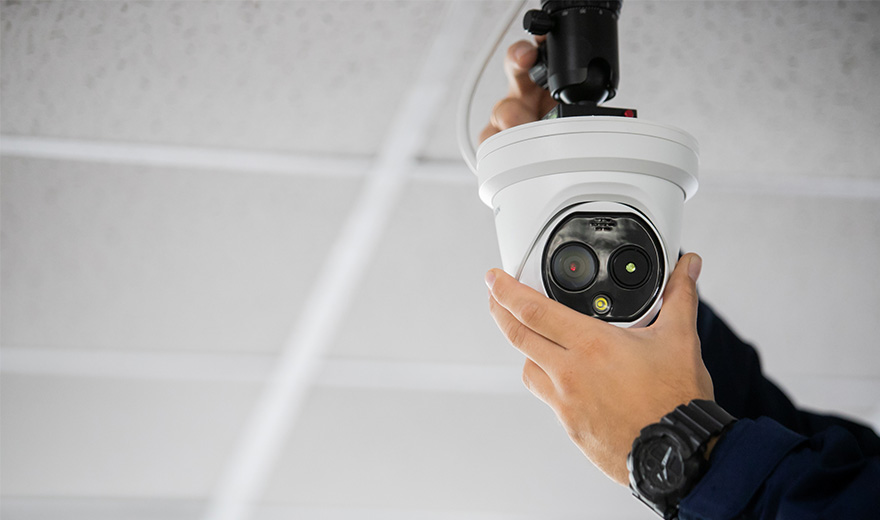
A common misconception is that better video insights require better cameras: higher resolution, more advanced sensors, or more expensive hardware. But that is not where the real bottleneck lies. A standard IP camera that is a few years old already captures what happens in a space perfectly well. The image quality is often more than sufficient to identify people, objects, movement, and behavior. The camera is doing its job.
The real limitation has always been the layer above it — or rather, the layer that is often missing in a standard camera system. Without intelligence, a camera is little more than a digital recorder. A recorder that still has to be manually reviewed to understand what is happening or what has happened. Vision AI adds that missing layer and turns a passive recording system into an active analytics platform.
Once Vision AI is connected to existing cameras, it changes what those cameras can do. They no longer just detect motion — they can also identify what is actually taking place.
Think of capabilities such as:
All of these analytics can run on the cameras that are already installed. There is no need to replace the existing cameras. No new cabling. No major infrastructure investment. The hardware is already there — the intelligence is simply added on top.
For many organizations, camera infrastructure is a difficult cost item to justify. The cameras are installed, licenses are active, storage keeps adding up, but the concrete value is often hard to demonstrate until an incident occurs. It is an investment in prevention, but the ROI only becomes visible when something goes wrong.
Vision AI changes that equation. Suddenly, the camera system delivers value beyond incident response:
The cameras were already there. The value was always there too — what was missing was the intelligence to unlock it. Fortunately, Vision AI makes that possible.
Vision AI already makes existing camera systems significantly more valuable. But with the introduction of Video Language Models (VLMs), another layer is added: the move from detection to understanding.
Where traditional Vision AI works with rules and thresholds — for example, if a person enters zone X, trigger an alarm — VLMs can understand what is happening in a scene. They combine visual recognition, temporal understanding, and language models to interpret not only what is visible, but also what is taking place.
The practical difference looks like this:
Traditional analytics: “Person detected. Object detected. Person no longer visible.”
With VLM: “A person places a bag next to a pillar and leaves the area without taking the bag.”
This level of contextual understanding makes it possible to query video data in a completely new way. Instead of filtering by events and cameras, users can ask questions such as:
The system automatically translates these questions into objects, locations, timelines, and behavior patterns, and returns the exact situations that match. Video then becomes a searchable source of information.
Taken together, this means the value of a camera system is no longer fixed at the moment of installation. With Vision AI and VLMs, that value continues to grow — without the need to change the hardware. Organizations that invest in Vision AI today are also laying the foundation for the capabilities of tomorrow. The cameras already in place will soon be able to answer questions that may not even be asked yet today.
Get in touch for a demo and discover which questions you could start asking your existing cameras as early as tomorrow.