Webinar // Follow the Flow: Realtime Tracking Without Privacy Risks
When dealing with an incident, suspicious situation or missing person, acting quickly and effectively is critical. Which people or vehicles…
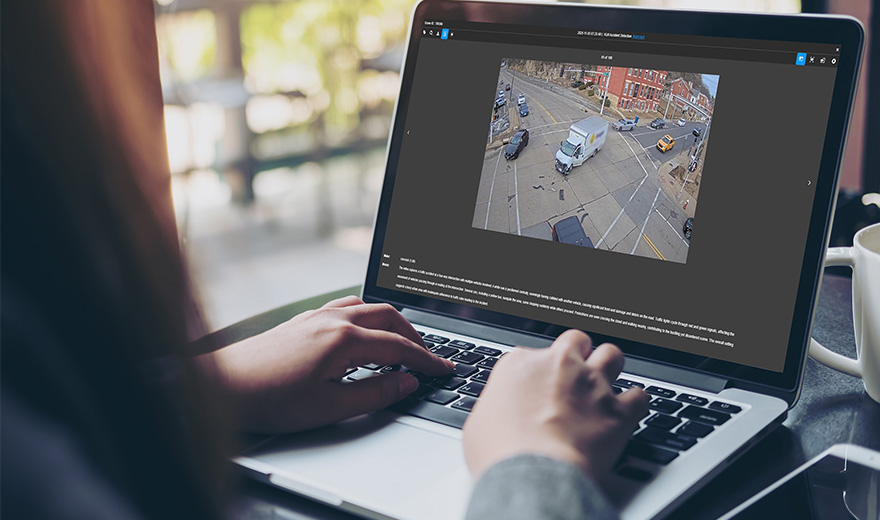
Recently, we started using Video Language Models (VLMs) in the Vaidio platform. That may sound technical — and it is — but the impact is highly practical. It means that video is no longer analyzed only for individual objects or simple events; the system can now understand what is happening in the scene and describe, search, and explain it.
But what exactly are Video Language Models? And why are they such an important next step in Video Analytics and Vision AI? In this article, we explain.
‘Traditional Video AI’ (which is still a relatively new technology, so not really traditional at all) is strong at detection. It can identify:
That is already extremely valuable, but it also has limitations. Each of these observations stands on its own. AI does not know whether that person is a technician, a patient, or an intruder. It sees a bag, but not whether it was intentionally placed or accidentally left behind. It detects movement, but it does not understand intent.
In practice, this means operators and analysts still have to interpret a lot themselves. They receive alerts, review footage, draw conclusions, and write their own reports. AI provides the data — humans turn it into meaning.
Video Language Models fundamentally change this.
A Video Language Model combines three technologies:
Together, these models allow a system not only to determine what is in the scene, but also what is happening.
Instead of:
“Person detected. Object detected. Person left the scene.”
A VLM can, for example, say:
“A person places a bag next to a pillar and leaves the area without taking it.”
That is no longer a set of isolated detections. It is a description of an event.
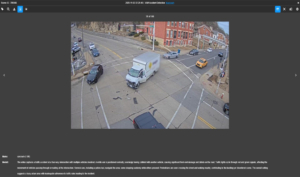
By integrating Video Language Models into Vaidio, the role of video inside an organization changes. Video is no longer just a stream of images to watch, but an information source that you can query.
Instead of clicking through cameras, timelines, or detected events, you can now ask questions such as:
VLMs automatically translate these questions into:
and then search all available video data to find exactly those situations.
The key difference between ‘traditional’ analytics and VLMs lies in context.
Traditional analytics work with rules:
Video Language Models understand events in relation to each other:
This makes it possible to recognize real-world scenarios rather than just isolated triggers. The system can, for example, distinguish between:
That nuance is exactly what is needed to support reliable decision-making in complex environments.
Adding VLMs to Vaidio delivers several key improvements:
After an incident, the system can automatically describe what happened. Instead of manually reviewing footage, you receive a summary of how the incident unfolded.
Operators, security teams, and analysts no longer need to build complex filters. They can simply ask questions in normal language.
Because the system understands behavior in context, it can better distinguish between normal and abnormal activity.
Without any new hardware, organizations can suddenly ask much deeper questions about what is really happening in their environments.
With the introduction of Video Language Models, Vaidio is moving from Video Analytics to Vision Intelligence. It is no longer just about seeing objects, but about understanding situations. Video becomes a source of knowledge, not just imagery. That is why this technology plays such a crucial role in the future of security, safety, and operational insight — and why we have already taken this step within the development of the Vaidio platform.
Want to see what VLMs look like inside Vaidio? Register for the What’s New webinar about Vaidio 9.2 on Thursday, January 22 via the button below.