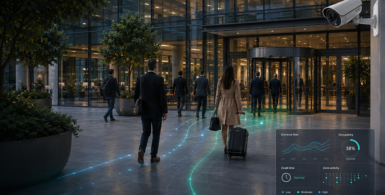
Webinar // Follow the Flow: Realtime Tracking Without Privacy Risks
When dealing with an incident, suspicious situation or missing person, acting quickly and effectively is critical. Which people or vehicles…


Shopkeepers have always had to deal with theft, but last year took the crown. Almost 45,000 reports were made to the police in 2023. This is the highest number in a decade. To combat theft, smart technology, such as AI-driven video analytics, is increasingly being deployed. In what area this technology can support, you can read in this article.
First, back to that explosive growth last year. Because the increase in the number of thefts, entails significant financial losses for business owners. According to Branch organisation INretail about 1% of sales disappear due to theft. To put that percentage in perspective, an average supermarket has an annual turnover of €7mln. That means an average loss of as much as €120,000 per supermarket, per year. What causes this explosion in thefts is still unknown, according to the police. It is, however, associated with the expensive times we are currently living in.
To reduce theft, various techniques have been used for years. Video surveillance is perhaps the best known. Unfortunately, this technology is far from foolproof. In practice, it is impossible to monitor video images all day long. It is labour-intensive, therefore very costly and the risk of errors is considerable. Fortunately, the development of Video AI Analytics has brought opportunities to tackle the issue of shoplifting. But what exactly is Video AI Analytics?
Video AI Analytics is the process of using smart algorithms to give meaning to video images. This enables the system to automatically recognise what is happening within a given field of view. Video analytics software distinguishes between different objects and recognises certain activities or behaviours that trigger a user response or notification. So, simply put, the software converts video images into data, to which meaning can be given. For example: someone puts an item from the shop in his or her pocket, alert shop staff.
A Video AI Analytic system operates as an independent system and thus analyses real-time and/or historical footage. This means it can be deployed in combination with your existing camera network. It makes your CCTV system smart, so to speak. The technology enables retailers to identify theft behaviour more easily and automatically, react quickly and ultimately prevent theft. By using smart search filters, searching through hours of footage is also easily possible when desired.
All while protecting customer privacy through privacy filters. Besides reducing theft and associated costs for retailers, using AI video analytics in retail spaces helps improve security and ensure peace of mind for customers and employees.
The open nature of a Video AI Analytic system makes it possible to receive real-time notifications by any means. Think of notifications via e-mail, SMS and app or via a VMS or PSIM system. This leaves you free to decide on which device shop personnel are alerted. Quite convenient when you are on the shop floor. An external control room can also be involved in the verification of detections.
Video AI Analytics goes beyond theft alone. As mentioned above, the technology is able to understand what is happening on screen. This, of course, can be applied very broadly. The most common applications of Video AI Analytics in retail, besides theft detection, include:
Video footage contains a huge amount of data that is golden for optimising your shop floor. Count people and generate heatmaps to gain insight into shopping traffic, for example. Where do they stop in the shop to look and where do they not? Analyse in addition the demographics of shoppers and tailor your promotions accordingly.
Prevention is better than cure. Also in the field of theft, of course. With Video AI Analytics, it is also possible to track people based on external features such as clothing or, for example, a backpack. This gives you insight into where a person is (has been) at what time.
A feature we actually mentioned earlier in this article, but worth mentioning again: Video Search. This feature allows you to use smart search filters to find certain people or situations in hours of footage within seconds. This saves a lot of time and helps you in your search for a possible thief or, for example, a runaway child.
So, as is clear, the possibilities of Video AI Analytics for retail are endless.
After reading this article, curious what Video AI Analytics can do for your shop in the fight against shoplifting? Contact one of our specialists or take a look at the overview page with our solutions for the retail sector.